

HCSGI
Updated Mon November 2, 2026
Published Under: Oxygen Therapy
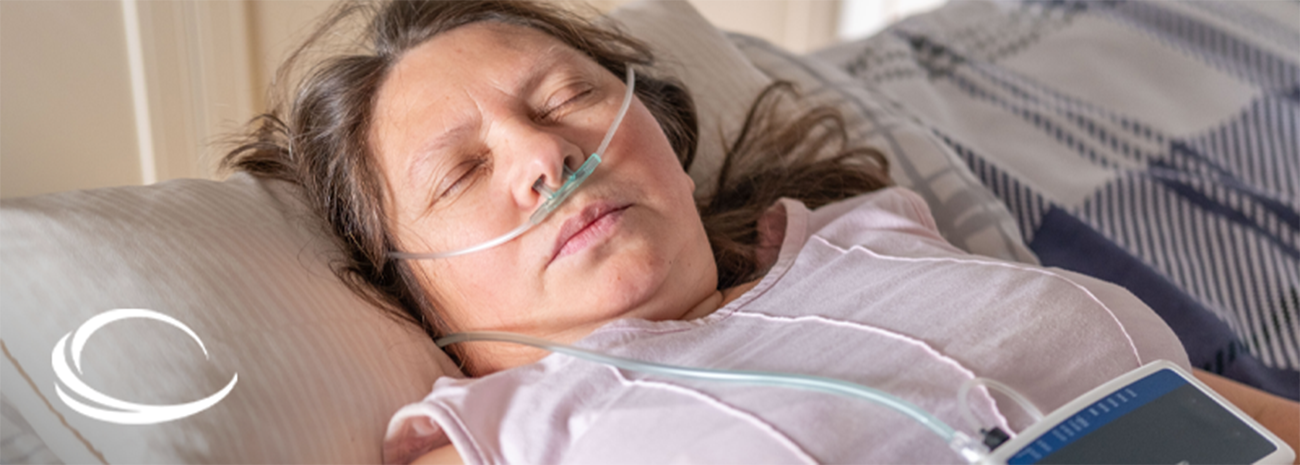
Most people don’t spend much time thinking about their breathing after they fall asleep. But for some people, oxygen levels can drop during the night without an obvious warning.
These changes may be related to sleep apnea, a chronic lung condition, or another health issue that affects breathing during sleep. If you’ve been waking up tired, dealing with morning headaches, or wondering whether you’re getting enough oxygen at night, it’s worth discussing those concerns with your healthcare provider.
Quick Answer
Why might oxygen levels drop during sleep?
Breathing naturally becomes slower and shallower during sleep. For some people, sleep apnea, COPD, another chronic lung condition, or a health issue affecting breathing may make it harder to maintain enough oxygen in the blood.
Symptoms and home readings can’t identify the cause on their own. Your healthcare provider may recommend overnight pulse oximetry, sleep apnea testing, an in-lab sleep study, or another evaluation based on your health history and symptoms.
On This Page
Use the links below to jump to a section:
Why Oxygen Levels Change During Sleep
Sleep changes the way you breathe. Your breathing may become slower and shallower, and the muscles that help keep your airway open relax.
For many people, these changes don’t cause a problem. For others, a sleep-related breathing disorder or an existing lung, heart, muscle, or nerve condition may make it harder to maintain enough oxygen in the blood.
What does oxygen saturation mean?
Oxygen saturation is an estimate of how much oxygen your blood is carrying. It may appear as SpO₂ on a pulse oximeter or medical report. A drop in oxygen saturation during sleep is sometimes called nocturnal oxygen desaturation. That simply means the blood’s oxygen level decreased during the night.
A small fluctuation can occur during sleep. Whether a change needs attention depends on the full pattern, the person’s health history, and the possible cause. Your healthcare provider can explain what the results mean for you.
What Can Cause Low Oxygen Levels at Night?
The answer can be different for everyone. Several conditions can affect breathing or oxygen levels during sleep.
Sleep Apnea
Sleep apnea causes breathing to stop and restart during sleep.
Obstructive Sleep Apnea
Obstructive sleep apnea occurs when the upper airway becomes blocked, reducing or stopping airflow.
Central Sleep Apnea
Central sleep apnea occurs when the brain doesn’t consistently send the signals needed for breathing.
Possible signs include:
- Loud or frequent snoring
- Gasping for air during sleep
- Breathing that stops and restarts
- Morning headaches
- Daytime sleepiness
- Trouble concentrating
- Waking frequently during the night
You may not notice these signs yourself. A family member or caregiver may be the first person to notice loud snoring, gasping, or pauses in breathing.
The National Heart, Lung, and Blood Institute recommends talking with a healthcare provider if you or someone close to you notices snoring, gasping, breathing pauses, excessive sleepiness, or other signs of poor-quality sleep. Learn more about sleep apnea and its symptoms.
If your healthcare provider diagnoses sleep apnea and prescribes equipment, we offer respiratory assist devices, including:
- CPAP, or continuous positive airway pressure
- BiPAP, or bilevel positive airway pressure
- ASV, or adaptive servo-ventilation
The appropriate device and settings depend on your diagnosis and prescription.
COPD and Other Lung Conditions
People living with chronic obstructive pulmonary disease, commonly called COPD, or another chronic lung condition may experience lower oxygen levels during sleep.
Breathing naturally becomes slower during sleep. For someone whose lungs already have difficulty moving oxygen into the blood, nighttime changes may make those problems more noticeable.
Some people may have acceptable oxygen levels while awake but lower levels during sleep. Testing is needed to determine whether that is happening and what it means.
Other Conditions That Affect Breathing
Other possible causes include:
- Obesity hypoventilation syndrome, which can cause breathing to become too shallow
- Neuromuscular conditions that affect the muscles used for breathing
- Certain heart conditions
- Other disorders that affect airflow or breathing control
A reading can’t identify the cause: A low overnight oxygen reading can show that a change occurred, but it can’t identify the cause on its own.
Signs of a Nighttime Breathing Problem
Because these changes happen while you’re asleep, you may first notice them through daytime symptoms or comments from someone who sees you sleeping.
Possible signs include:
• Frequent awakenings
• Morning headaches
• Ongoing fatigue
• Daytime sleepiness
• Trouble focusing
• Restless or unrefreshing sleep
• Shortness of breath after waking
• Gasping or choking during sleep
• Loud snoring
• Witnessed pauses in breathing
These symptoms don’t prove that your oxygen level is dropping. They can have several causes, but they’re worth discussing with your healthcare provider when they continue or interfere with daily life.
Already using oxygen or sleep equipment?
Don’t change your oxygen flow, CPAP pressure, BiPAP settings, or another prescribed treatment based on symptoms or a home reading.
Talk with your healthcare provider about symptoms or treatment concerns. If you have questions about equipment or supplies we provide, call 847-982-9880.
View Sleep and Respiratory Equipment
How Are Oxygen Levels Checked During Sleep?
Your healthcare provider may recommend testing based on your symptoms and health history.
Possible tests include:
Overnight Pulse Oximetry
Records estimated oxygen levels and pulse during the night.
Home Sleep Apnea Testing
Collects several breathing measurements at home to help evaluate possible obstructive sleep apnea.
In-Lab Sleep Study
Records breathing and other body signals while you sleep in a monitored setting.
These tests collect different information. Your healthcare provider will decide which option is appropriate.
What Can Overnight Pulse Oximetry Tell You?
An overnight pulse oximeter usually uses a small sensor placed on a finger. It estimates oxygen saturation and records how that estimate changes during the night.
The report may show patterns, such as repeated drops or longer periods of lower oxygen. Your healthcare provider will interpret those findings alongside your symptoms, diagnosis, and usual oxygen level.
Overnight pulse oximetry has limits:
- It doesn’t record every change in airflow or breathing.
- It doesn’t show when you move from one stage of sleep to another.
- It doesn’t explain why your oxygen changed.
- It can’t diagnose sleep apnea by itself.
- Movement, cold hands, nail products, circulation, and sensor placement may affect a reading.
The American Thoracic Society explains that pulse oximetry can estimate oxygen levels during sleep, but it doesn’t provide all the information available from other medical testing. Read the patient guide to oxygen therapy and pulse oximetry.
When ordered as part of your care, we can provide home pulse oximeter testing and send reports to your referring provider.
Have an Order for Overnight Testing?
Call us to ask about home pulse oximeter testing, equipment instructions, and reporting to your provider.
Call: 847-982-9880
Ask About Home TestingWhen Should You Talk With Your Healthcare Provider?
Poor sleep once in a while can happen to anyone. But if you regularly wake with headaches, feel exhausted during the day, or have signs of a nighttime breathing problem, start a conversation with your healthcare provider.
Mention symptoms such as:
- Frequent morning headaches
- Persistent fatigue or daytime sleepiness
- Loud snoring
- Gasping during sleep
- Witnessed pauses in breathing
- Frequent nighttime awakenings
- Worsening symptoms from a diagnosed lung or heart condition
- Concerns about prescribed oxygen or sleep therapy
Your healthcare provider can decide whether your symptoms call for overnight pulse oximetry, sleep apnea testing, a sleep study, or another evaluation.
Don’t begin, stop, or adjust supplemental oxygen or sleep therapy on your own. Oxygen and sleep equipment must be used according to the individual prescription.
If you have severe or quickly worsening breathing difficulty or another medical emergency, call 911.
How We Support Sleep and Oxygen Therapy
Your healthcare provider is responsible for diagnosing the cause of nighttime breathing problems, ordering tests, and prescribing treatment. Once equipment or monitoring is ordered, we can help you understand what you’ve been prescribed and how the equipment should be used.
Our respiratory services include:
- Home oxygen systems
- CPAP, BiPAP, and ASV equipment
- Home pulse oximeter testing
- Pulse oximeter reports sent to referring providers
- Equipment instruction and manuals
- Home visits and follow-up when applicable
You can also browse our respiratory equipment catalog or explore our broader in-home respiratory services.
Have Questions About Prescribed Equipment?
Call 847-982-9880 or send us a message. We’ll help you understand the equipment and support available through Health Care Solutions Group, Inc.
Common Questions About Oxygen Levels During Sleep
Can oxygen saturation decrease during normal sleep?
Small fluctuations may occur as breathing naturally changes during sleep. Whether a change needs further evaluation depends on the pattern, your usual oxygen level, health history, and symptoms. Your healthcare provider should interpret overnight results.
What is nocturnal oxygen desaturation?
Nocturnal oxygen desaturation means that blood oxygen levels drop while you’re asleep. The term describes what happened, but it doesn’t explain why it happened. Your healthcare provider may recommend testing to look for a possible cause.
Is snoring a sign of low oxygen?
Not necessarily. Snoring can happen without a meaningful drop in oxygen. However, loud snoring combined with gasping, breathing pauses, morning headaches, or daytime sleepiness may point to sleep apnea and should be discussed with your healthcare provider.
Can overnight pulse oximetry diagnose sleep apnea?
No. Overnight pulse oximetry can record oxygen and pulse patterns, but it doesn’t collect all the information needed to diagnose sleep apnea. Your healthcare provider may recommend a home sleep apnea test or an in-lab sleep study.
Are low oxygen levels during sleep always caused by sleep apnea?
No. Sleep apnea is one possible cause, but lung, heart, muscle, nerve, and other health conditions may also affect nighttime oxygen levels. A low oxygen reading can’t identify the cause by itself.
Should people using oxygen monitor their levels at night?
Only when a healthcare provider recommends it and explains how the information should be collected and used. Don’t change your prescribed oxygen flow or hours of use based on a home reading unless your healthcare provider instructs you to do so.
What should I do if I think my oxygen is dropping at night?
Talk with your healthcare provider about your symptoms. Your provider may recommend overnight pulse oximetry, sleep testing, or another evaluation. If you’re experiencing a medical emergency, call 911.
This article provides general educational information and isn’t medical advice. Don’t begin, stop, or change oxygen therapy, CPAP, BiPAP, ASV, or another prescribed treatment without instructions from your healthcare provider.
Comments